Android
This article aims to introduce how to set up VK authentication so that your game can log in through the Player Network authentication service via the VK channel.
Prerequisites
1. Set up your game on the VK developer site
1. Create VK application
The following information was last updated on January 14, 2025. Please refer to the latest information on the VK developer site.
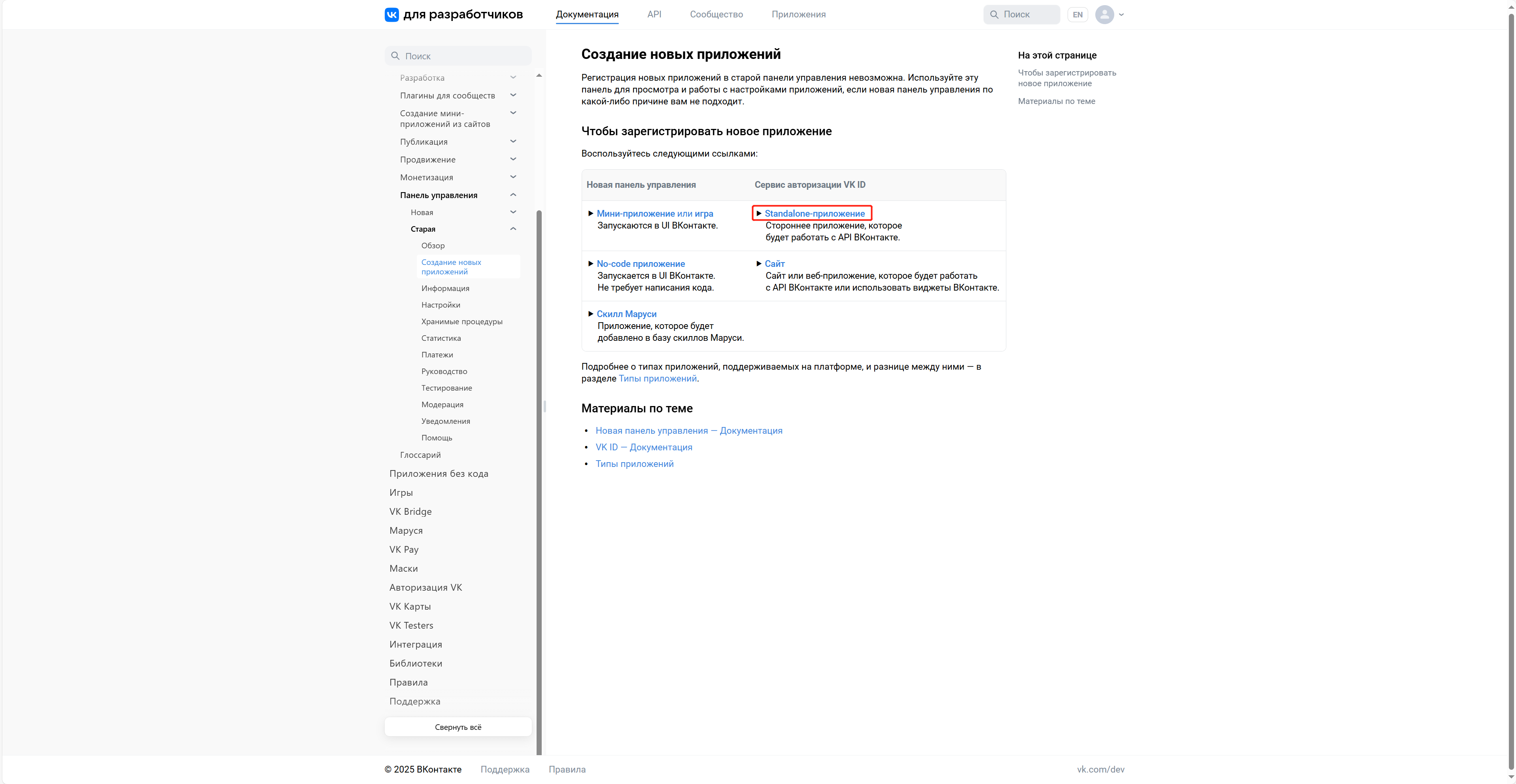
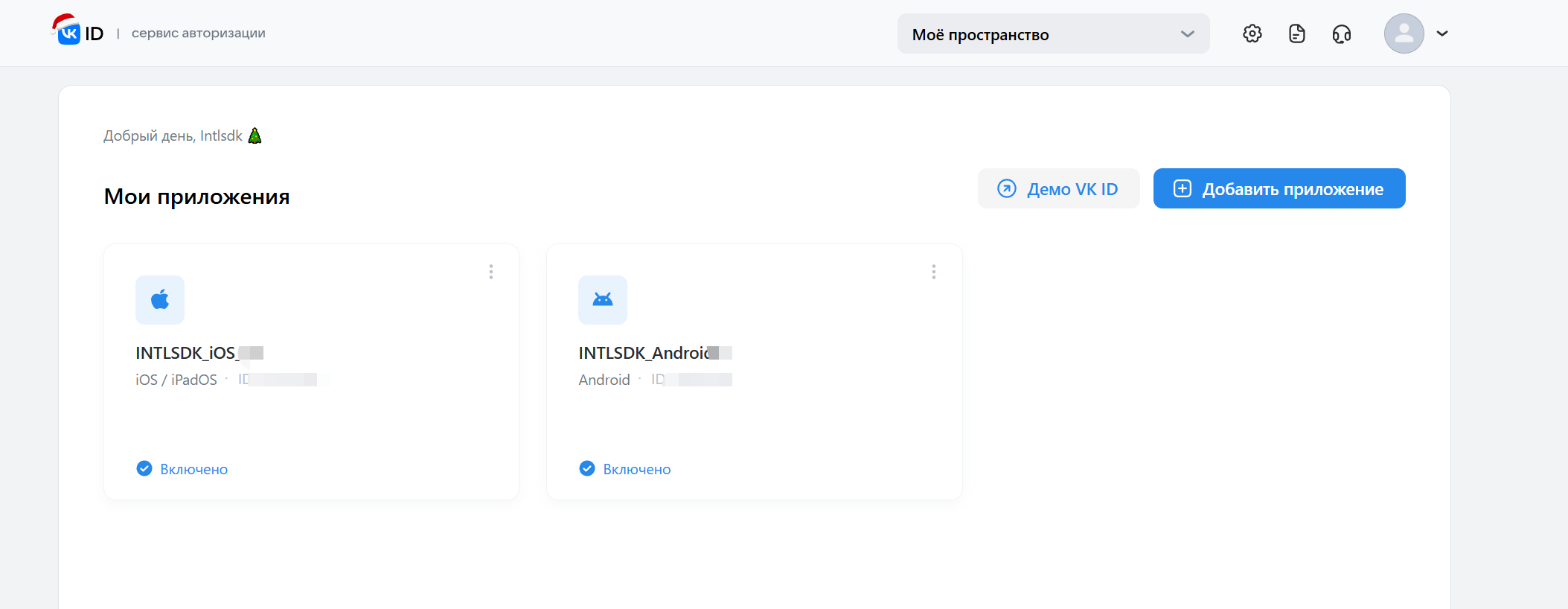
Currently, you can no longer create VK applications on the VK developer site. Follow the steps below to navigate to the VK ID developer website.
Player Network SDK does not currently support VK ID. For details and version support plans, please contact the Player Network assistant.
-
Log in or register on the VK developer site.
-
Click Standalone-приложение.
-
Navigate to the VK ID developer website to create an application.
2) Configure the application
Enter application information
-
Visit the VK developer site.
-
Enter the application information on the Information page for the corresponding application.

-
Click Save to save the entered information.
Enable OpenAPI
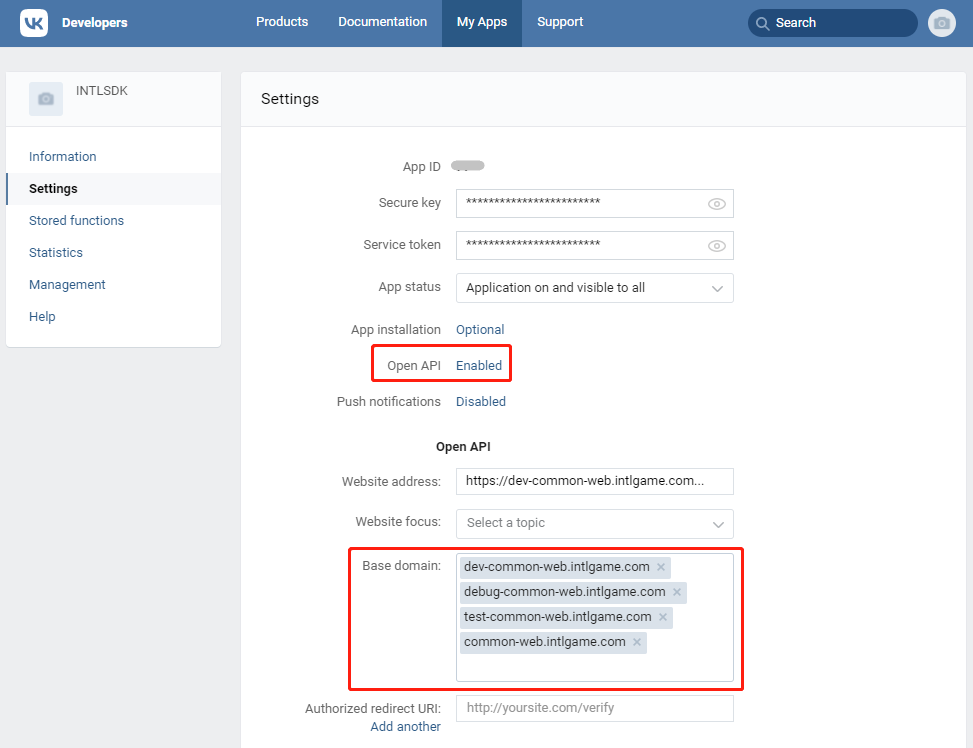
- Enable OpenAPI.
- Add the following base domains:
- dev-common-web.intlgame.com
- debug-common-web.intlgame.com
- test-common-web.intlgame.com
- common-web.intlgame.com
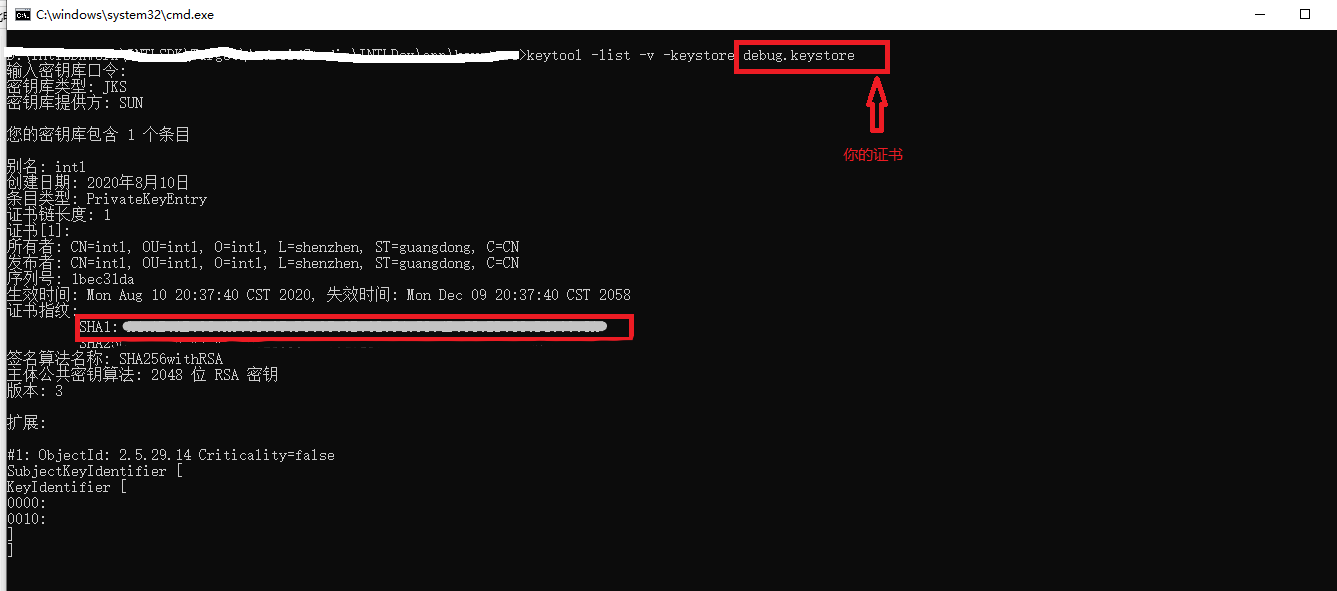
Obtain Android fingerprint
To obtain the Android fingerprint, follow the instructions in Get the SHA1 Value for Android.
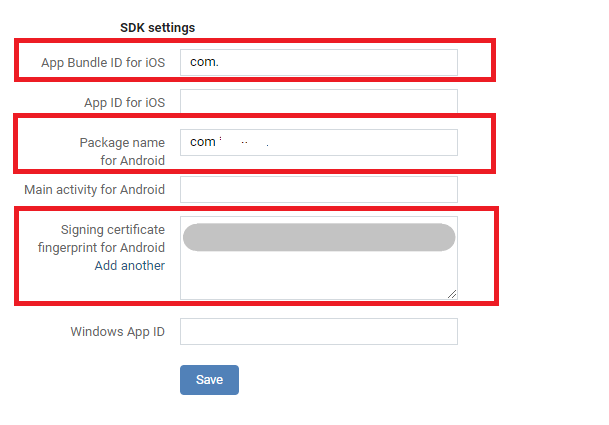
SDK settings
- Go to the Settings page of the application.
- In the SDK settings section, enter the App Bundle ID for iOS, Package name for Android, and Signing certificate fingerprint for Android.
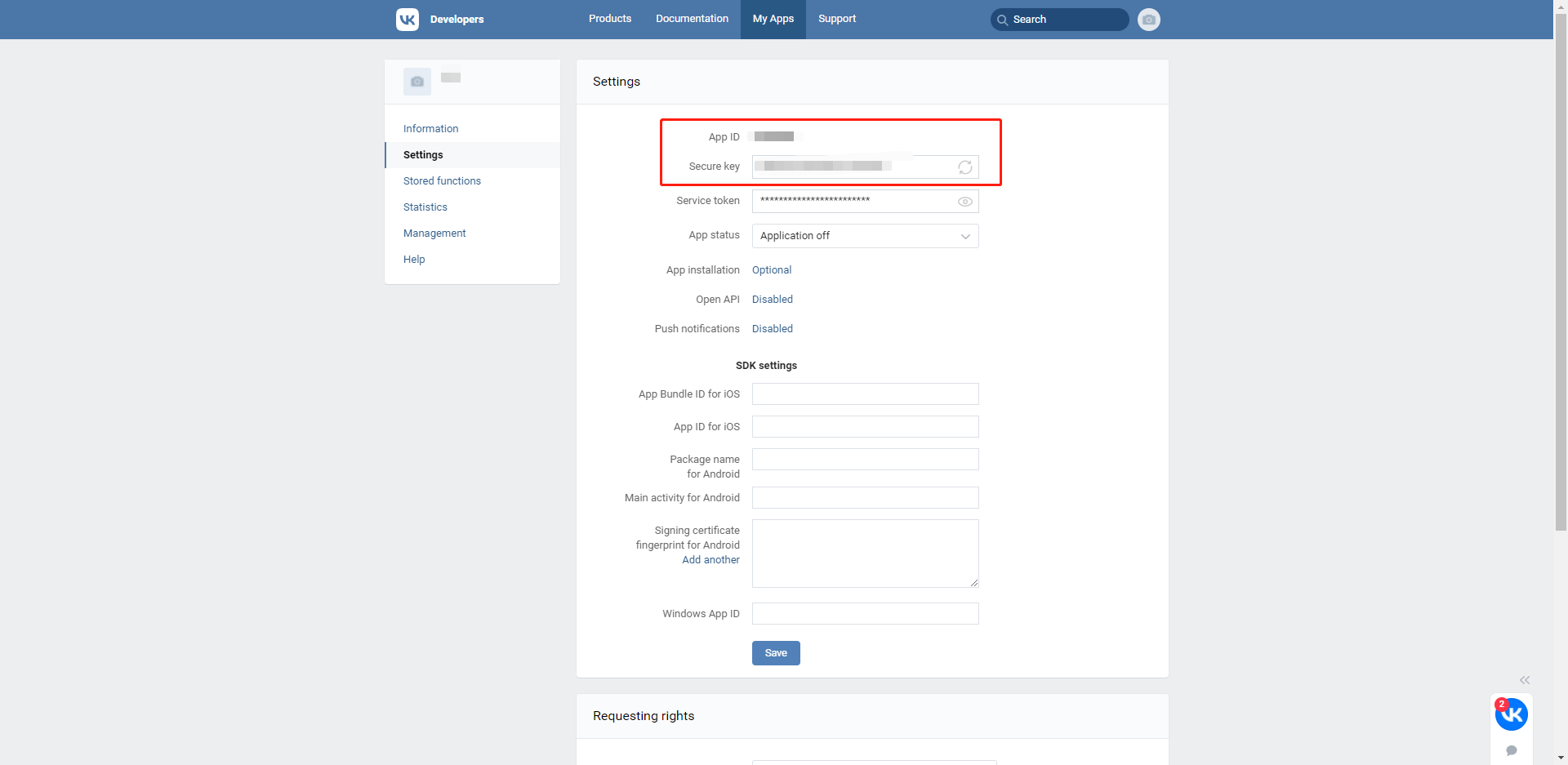
Obtain App ID, Secure key, and other information
Go to the App's Settings page to get the App ID and other information.
- Obtain a Player Network Console login account.
- Create a new project for the game, or join an existing project.
- Download SDK.
- Integrate the SDK.
- Add VK as a business login authentication method in the Player Network Console.
Step 1: Configure SDK for VK login
-
In the
AndroidManifestfile, make sure the required permissions are added.VK requires internet access.<uses-permission android:name="android.permission.INTERNET"/> -
In the
vk_integers.xmlfile underAssets/Plugins/Android/INTLVK.androidlib/res/values, add the following configuration.<integer name="com_vk_sdk_AppId">your_app_id</integer>Replace
your_app_idwith your registered VK App ID. -
Open your project's INTLConfig.ini file:
[Android LifeCycle]
LIFECYCLE = VK
[VK]
VK_APP_ID = {INTL_VK_APP_ID}- Add VK in
LIFECYCLE.For more information, please see SDK Environment. - Replace
{INTL_VK_APP_ID}with your registered VK App ID.
- Add VK in
Step 2: Add VK login
- Register login-related callbacks.
- Unity
- Unreal Engine
// Add callbacks
public void AddAuthObserver()
{
    INTLAPI.AddAuthResultObserver(OnAuthResultEvent);
}

// Remove callbacks
public void RemoveAuthObserver()
{
    INTLAPI.RemoveAuthResultObserver(OnAuthResultEvent);
}

// Process the INTLAuthResult callback
public void OnAuthResultEvent(INTLAuthResult ret)
{
    Debug.Log($"MethodID: {ret.MethodId}");

    string methodTag = "";
    if (authRet.MethodId == (int)INTLMethodID.INTL_AUTH_LOGIN)
    {
        methodTag = "Login";
    }
    else if (authRet.MethodId == (int)INTLMethodID.INTL_AUTH_BIND)
    {
        methodTag = "Bind";
    }
    else if (authRet.MethodId == (int)INTLMethodID.INTL_AUTH_AUTOLOGIN)
    {
        methodTag = "AutoLogin";
    }
    else if (authRet.MethodId == (int)INTLMethodID.INTL_AUTH_QUERY_USER_INFO)
    {
        methodTag = "QueryUserInfo";
    }
    else if (authRet.MethodId == (int)INTLMethodID.INTL_AUTH_GET_AUTH_RESULT)
    {
        methodTag = "GetAuthResult";
    }
}
C++ Event Handling (above v1.15)
//configure callback
FINTLAuthEvent authEvent;
authEvent.AddUObject(this, &OnAuthResult_Implementation);
UINTLSDKAPI::SetAuthResultObserver(authEvent);
// Remove callbacks
UINTLSDKAPI::GetAuthResultObserver().Clear();
void OnAuthResult_Implementation(FINTLAuthResult ret)
{
    UE_LOG(LogTemp, Warning, TEXT("MethodID: %d"), ret.MethodId);
}
Unreal Event Handling
void OnAuthResult_Implementation(FINTLAuthResult ret)
{
    UE_LOG(LogTemp, Warning, TEXT("MethodID: %d"), ret.MethodId);
}
- Call the
AutoLogininterface to log in automatically.
- Unity
- Unreal Engine
INTLAPI.AutoLogin();
UINTLSDKAPI::AutoLogin();
- If automatic login fails, call the
Logininterface to let the player log in manually.
- Unity
- Unreal Engine
INTLAPI.Login(INTLChannel.VK);
UINTLSDKAPI::Login(EINTLLoginChannel::kChannelVK);
- Synchronize client authentication status with the game backend and wait for the final verification result.
Step 3: Acceptance testing for login functionality
Search for the keyword "AuthResult" in the Player Network SDK logs to confirm whether the channel name and OpenID are returned correctly.If correct, it means the integration configuration is successful, and login functionality has been successfully added.
If you encounter issues during integration, see FAQs.

